Why Your Uniswap Swap Keeps Failing
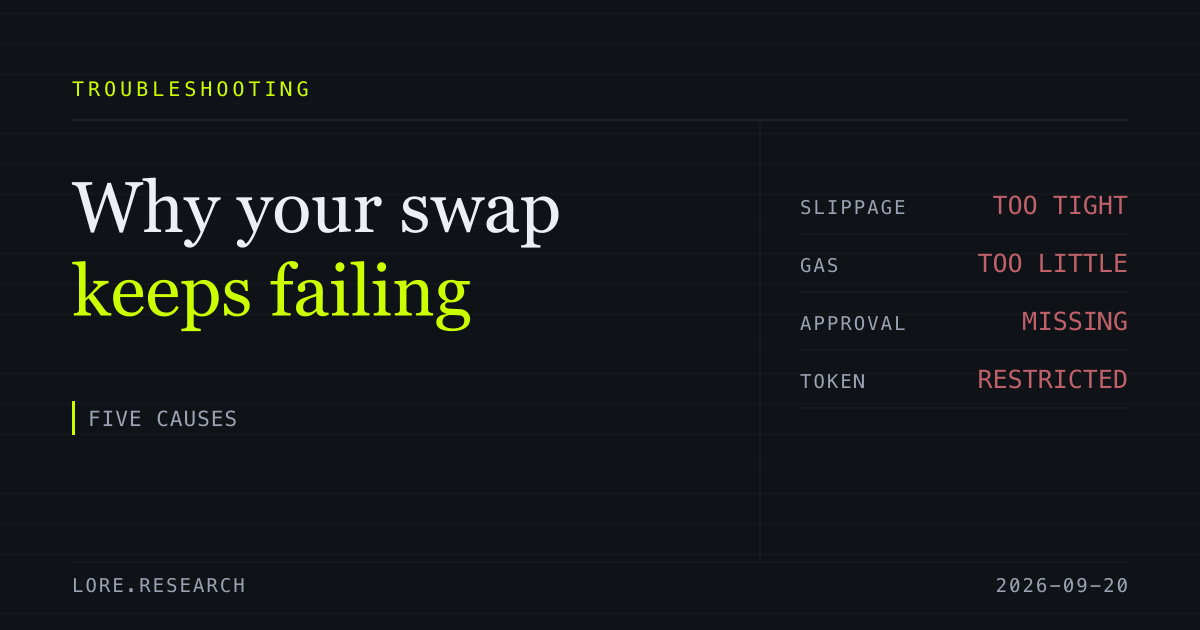
A failed swap is the chain refusing a trade on terms you set. Five reasons cover almost all of them.
The short answer
A failed swap is usually the network doing what you told it to. The five common causes are slippage tolerance set below what the pool now requires, not enough of the gas token left over after the trade, a missing or insufficient token approval, a pool too thin to fill the size you asked for, and a token whose contract restricts selling. The failure itself costs gas but not the trade, and the error text tells you which one it was. Raising slippage until something works is the one response that turns a cheap failure into an expensive fill.
The reassuring part first: a reverted transaction did not take your tokens. It cost the gas spent attempting it and nothing else. What it did do is tell you something, and the error text is worth reading before changing any setting.
One: slippage set below what the pool needs
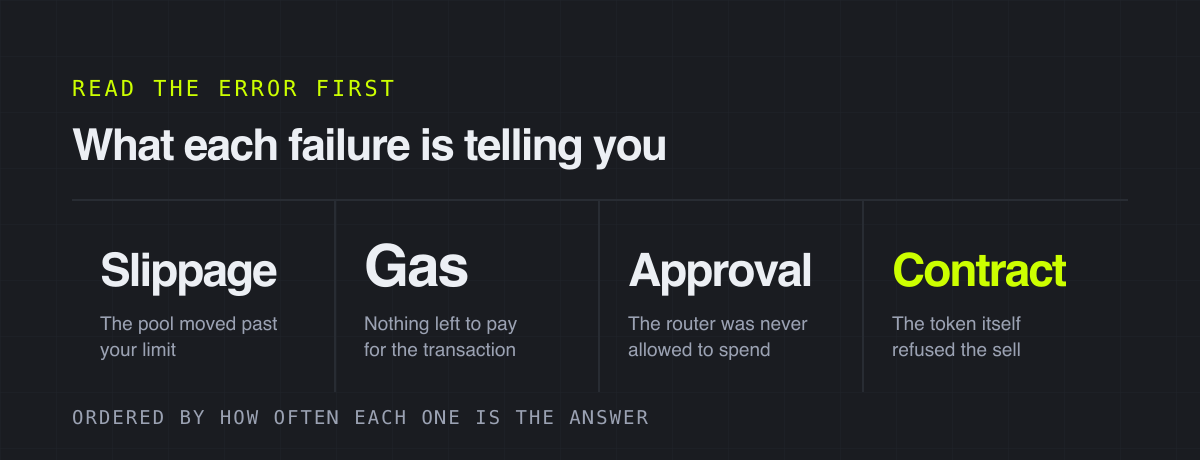
The most common cause by a wide margin. You set a maximum acceptable price movement, the pool moved past it before your transaction was included, and the trade cancelled rather than filling at a price you had declined. This is the protection working. Raise tolerance a step at a time, and if it needs a great deal, ask why the pool is moving that fast.
Two: no gas left
Gas on Robinhood Chain is paid in ETH. If you swapped nearly all of your ETH for a token, there may be nothing left to pay for the next transaction – including the one selling it back. Keep a reserve that you never trade. This is the failure that traps people in a position rather than merely inconveniencing them.
Three: the approval
Selling an ERC-20 requires two transactions: one granting the router permission to move that token, then the swap itself. If the approval failed, was rejected, or was set to a smaller amount than you are now trying to sell, the swap reverts. Wallets usually prompt for both, and it is easy to sign the first and lose the second.
Four: the pool cannot fill your size
You can ask a pool for more than it holds. On a thin pool a large order either fails or fills at a price so bad that your tolerance stops it. The fix is not a setting – it is a smaller order, or several smaller orders, or a different pool. Check depth on Dexscreener rather than inferring it from the chart.
Five: the token will not let you sell
This is the one to take seriously. Some contracts permit buying and restrict selling, either outright or for everyone except a list of addresses. A swap that buys fine and fails every time you try to exit is the signature of a honeypot, and no slippage setting will fix it because the refusal is in the contract.
The order to check things in
- Read the error. Most wallets name the reason and save you the guesswork.
- Check your ETH balance for gas before anything else.
- Try a much smaller test amount. If that fills, the problem was size or depth.
- If a small sell also fails while buys succeed, stop trading it and check the contract on Blockscout.
- Only then adjust slippage, and by small steps.
The instinct is to raise tolerance until something goes through. It usually does go through, at a price that makes the failure look like the cheaper outcome.
Tools mentioned
 Dexscreener
FAQ
Does a failed swap cost money?
It costs the gas spent on the attempt. Your tokens are untouched – a reverted transaction changes no balances beyond the fee. On this chain that fee is small, which is why a failed test trade is a cheap way to diagnose the problem.
What does 'transaction reverted' mean?
The contract refused to complete the operation and undid everything in it. It is a deliberate outcome, not a crash, and the reason is usually included in the error – slippage exceeded, insufficient allowance, or a restriction in the token itself.
Why can I buy a token but not sell it?
Most often because the contract is written that way. That is what a honeypot is, and it is the one failure on this list where the right response is to stop rather than to adjust a setting.
More from the blog
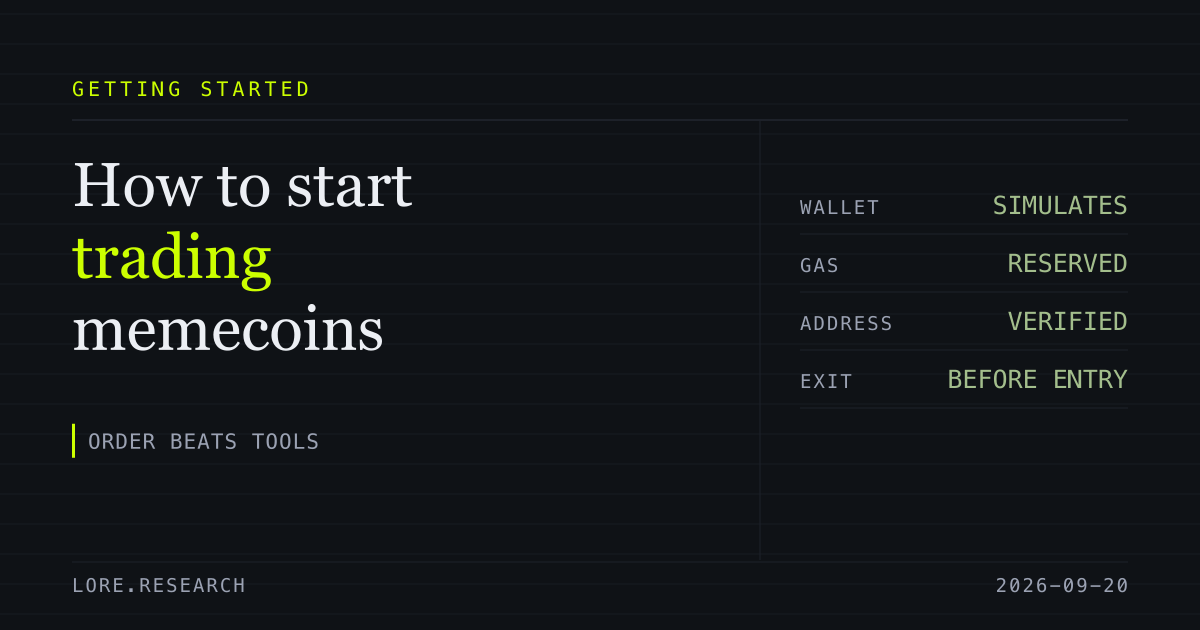
How to Start Trading Memecoins
Six things to set up before the first buy, in the order that stops the common mistakes.
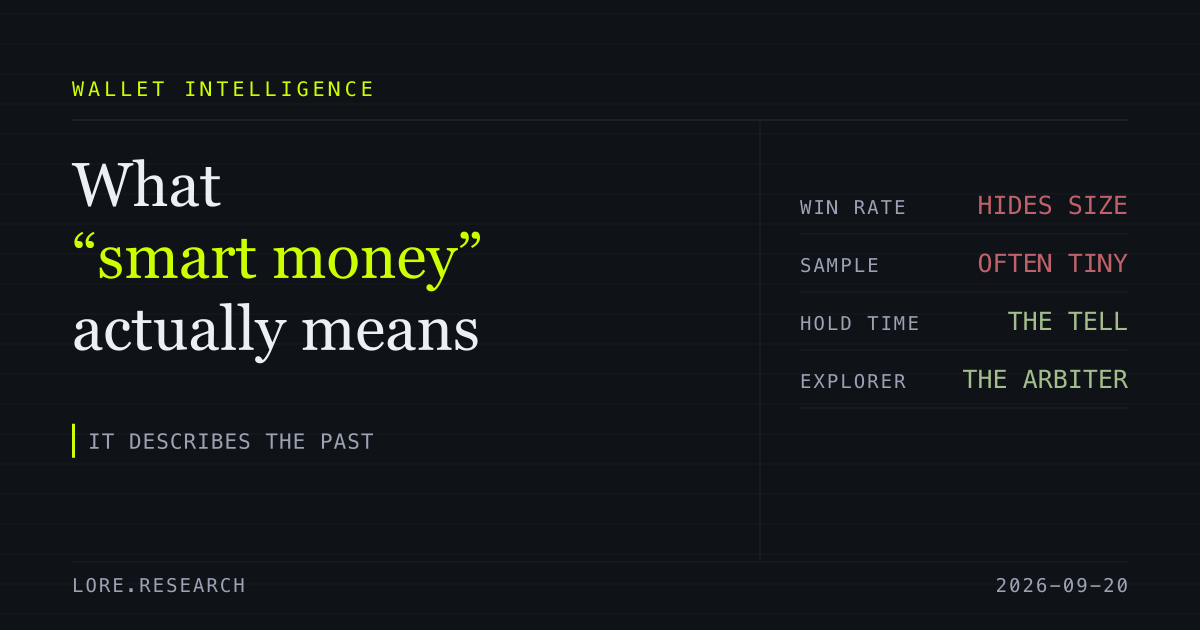
What “Smart Money” Means, and When the Label Lies
A wallet that made money is not the same as a wallet that knows something. Telling them apart is the whole skill.
What to Do After a Rug Pull
Nothing gets the money back. Several things stop the next hour being worse than the last one.