How to Spot a Crypto Honeypot Before You Buy
A token you can buy and cannot sell. The tell is in the contract, and it is readable in about a minute.
The short answer
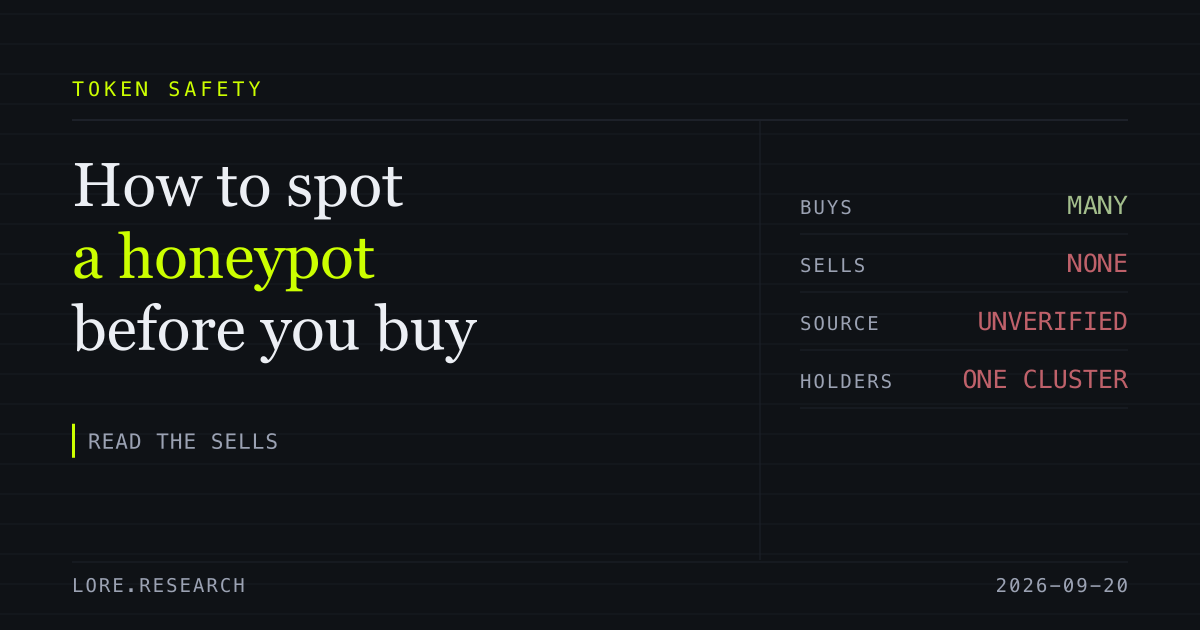
A crypto honeypot is a token whose contract lets you buy and prevents you from selling, so the chart rises on real buys that can never become sells. The reliable checks take about a minute: read whether the contract is verified and whether it contains transfer restrictions, look for existing sells from ordinary addresses in the token's transfer history, check whether holdings are concentrated in the deployer's cluster, and run an automated scan as a first pass. A rising chart with no successful sells by anyone but the deployer is the single strongest signal, and it is visible on any block explorer.
A honeypot in this context is not the security decoy the word usually means. It is a token engineered so that buying works and selling does not. The chart looks wonderful, because every buy is real and no sell ever pushes it down. You are looking at a line drawn entirely from other people's trapped money.
Read the sells, not the chart
This is the check that catches most of them and almost nobody does it. Open the token on Blockscout and look at its transfer history. On a real token you will see ordinary addresses selling – some at a profit, some at a loss, constantly. On a honeypot you will see a wall of buys and either no sells at all, or sells only from a small set of addresses that appeared at deployment.
A rising price with no successful exits by anyone is not a bullish signal. It is the mechanism.
Is the contract verified?
Verification means the published source compiles to the bytecode actually deployed, so you can read exactly what the contract does. It does not mean the contract is safe – a verified contract can be openly hostile, and some are. But an unverified contract on a token asking for your money is a deliberate choice by its author, and the reasonable response is to treat it as one.
What the restrictions look like
In readable source they are rarely subtle: a transfer function with a condition on the sender, an address list that can be updated after launch, a sell tax that can be raised to a hundred percent, a pause switch. None of these are illegal to write. All of them mean somebody can close the exit after you are inside.
Concentration
Open the holders tab. If a handful of addresses hold most of the supply, the question of whether you can sell is secondary to whether you would want to – they can exit into your liquidity whenever they choose. Bubblemaps draws the relationships between those addresses, which is how you tell twenty holders from one holder with twenty wallets.
Where scanners fit
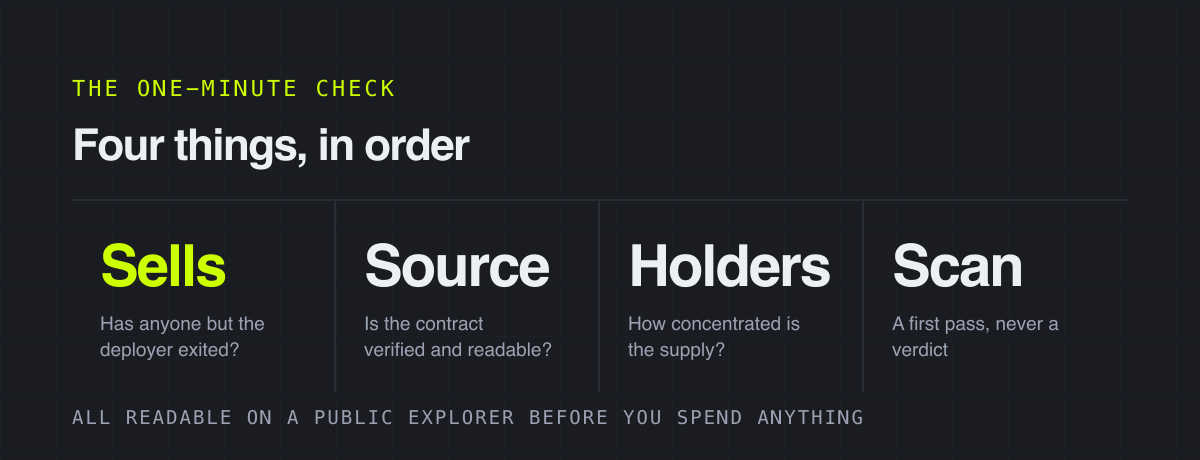
Automated checks – the safety scan in a terminal, or a dedicated scanner like HoodScan – simulate a sell and look for known patterns. They are a genuinely useful first pass and they catch the lazy versions instantly. What they cannot catch is a contract written to pass them, or one that becomes hostile after an owner call. Treat a clean scan as removing the obvious, not as clearing the token.
The check, in order
- Paste the contract address into the explorer. Do not search the ticker – tickers are not unique and impersonation is free.
- Look at transfers. Are ordinary addresses selling, or only buying?
- Check whether the source is verified. If not, that is your answer for most purposes.
- Open holders and look for concentration; run the cluster map if the distribution looks tidy.
- Run an automated scan last, as confirmation rather than as the decision.
None of this takes long, and the one minute it costs is the cheapest minute in memecoin trading. The people who lose money to honeypots almost never checked; they read a chart and a ticker and moved fast, which is precisely the behaviour the design is built around.
Tools mentioned
 Bubblemaps
 HoodScan
FAQ
What is a crypto honeypot?
A token whose contract permits buying and blocks selling, so the price only ever rises while holders cannot exit. The name comes from the trap, not from the security research tool that shares the word.
Can a honeypot checker be wrong?
Yes, in both directions. A scanner simulates a sell and matches known patterns, so it misses contracts written against it and occasionally flags unusual but honest ones. It narrows the field; it does not make the decision.
I can buy but not sell. Is it a honeypot?
Probably, though check the ordinary causes first: enough gas for the transaction, a valid approval, and slippage that the pool can meet. If small sells fail while buys succeed and the basics are fine, stop trading it and read the contract.
More from the blog
How to Start Trading Memecoins
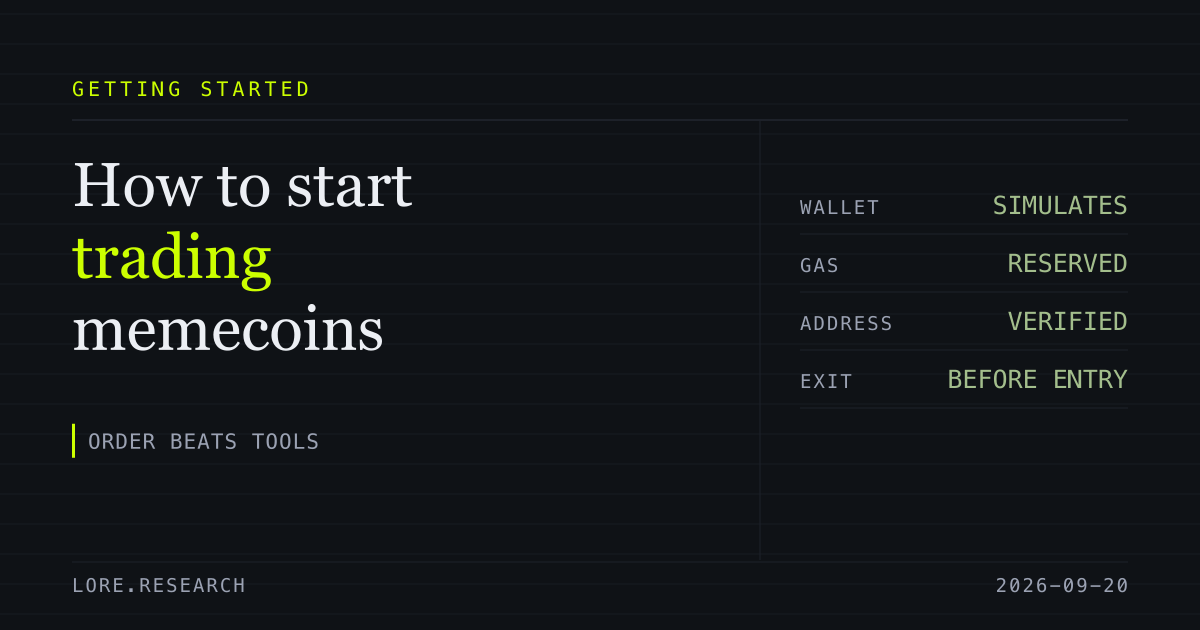
Six things to set up before the first buy, in the order that stops the common mistakes.
What “Smart Money” Means, and When the Label Lies
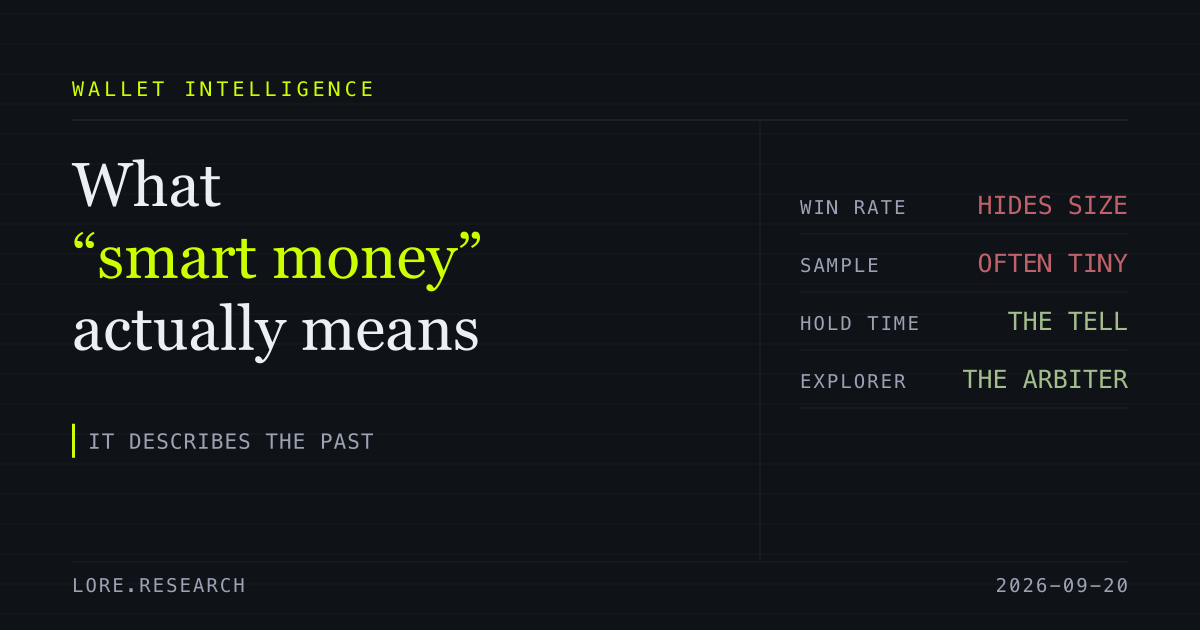
A wallet that made money is not the same as a wallet that knows something. Telling them apart is the whole skill.
What to Do After a Rug Pull
Nothing gets the money back. Several things stop the next hour being worse than the last one.