Do Crypto Trading Bots Actually Work?
Two completely different products share the name. One works and is boring. The other mostly does not.
The short answer
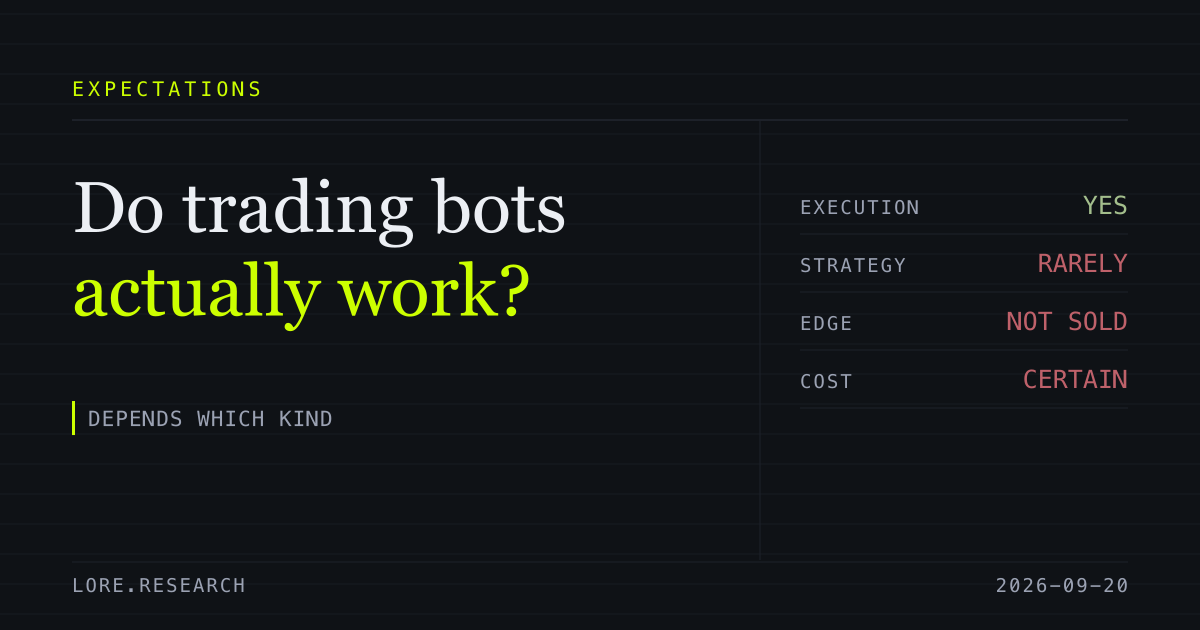
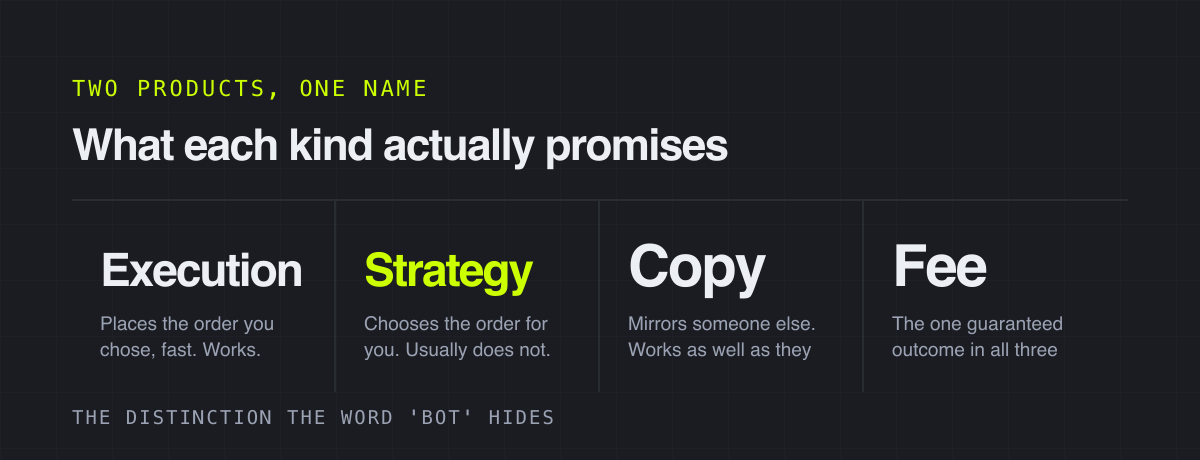
Two different products are called crypto trading bots and they deserve different answers. Execution bots – the Telegram bots used for memecoins – work, because all they promise is to place your order faster than you can. They do that reliably. Strategy bots, which promise to decide what to buy and return a profit while you sleep, mostly do not work, for the same reason no tool sold to the public can: an edge that survives being sold to everyone is not an edge. If a bot's pitch is speed and mechanics, judge it on speed and mechanics. If its pitch is returns, treat the returns as marketing.
The question gets a bad answer because it gets asked about two unrelated things. Someone searching it after reading about memecoin sniping and someone searching it after an advertisement for an AI trading system are asking about different products that happen to share a noun.
Execution bots: yes, and that is all they claim
Banana Gun, Maestro, Sigma Bot and the rest are execution tools. You decide what to buy; the bot buys it in one tap, faster than you could switch tabs and sign. On a launch where the first thirty seconds set the price, that is a real advantage, and it is measurable: either your transaction landed in the block you wanted or it did not.
So they work, in the narrow and honest sense that they do the job on the label. Whether using one makes you money is a separate question, and the answer there depends entirely on what you told it to buy.
Strategy bots: the arithmetic is against them
The other kind promises to find the trade as well as place it. Ignore the backtests – the problem is structural. A strategy with a genuine edge makes its owner money quietly. Selling it to ten thousand subscribers puts ten thousand people into the same positions at the same moment, which is precisely the thing that destroys an edge. A strategy that survives being sold at scale is usually one that was never an edge to begin with.
Copy bots sit in between
Copytrading is a third case: the strategy is a real person's, and it may genuinely be good. What the bot adds is mechanical – it mirrors entries. It mirrors exits far worse, because the wallet you follow sells into liquidity you are also selling into, a few seconds later. That gap is why most copytraders underperform the wallet they copy even when the wallet is excellent. Pick the wallet on its record with StalkChain or Cielo Finance before you pick the bot.
How to judge one honestly
- Ask what it promises. Speed and order types are checkable. Returns are not.
- Price the fee against your turnover. A percentage per trade compounds fast on a strategy that trades often.
- Assume the backtest is the best case. It was built by someone who knew the answer already.
- Separate the tool from the decision. A bot cannot save a thesis, and a good thesis rarely needs one.
The useful reframing: a bot is a keyboard, not an analyst. Judge it on how well it types.
Tools mentioned
 Banana Gun
 Sigma Bot
 Maestro
 Cielo Finance
 StalkChain
FAQ
Can trading bots make you money?
An execution bot can save you the seconds that decide a launch, which is worth money if your entries were going to be good anyway. A strategy bot that promises returns is selling something that stops working the moment enough people buy it.
What is the best crypto trading bot?
For execution on this chain, the mainstream Telegram bots do the same job and differ mainly in chain coverage and fee. For copytrading, the bot matters far less than the wallet you choose to follow – that decision is most of your result.
Do trading bots work for beginners?
Execution bots make a beginner faster at doing the wrong thing, which is rarely an improvement. Learn what you are buying and why first; speed is only worth paying for once the decision behind it is sound.
More from the blog
How to Start Trading Memecoins
Six things to set up before the first buy, in the order that stops the common mistakes.
What “Smart Money” Means, and When the Label Lies
A wallet that made money is not the same as a wallet that knows something. Telling them apart is the whole skill.
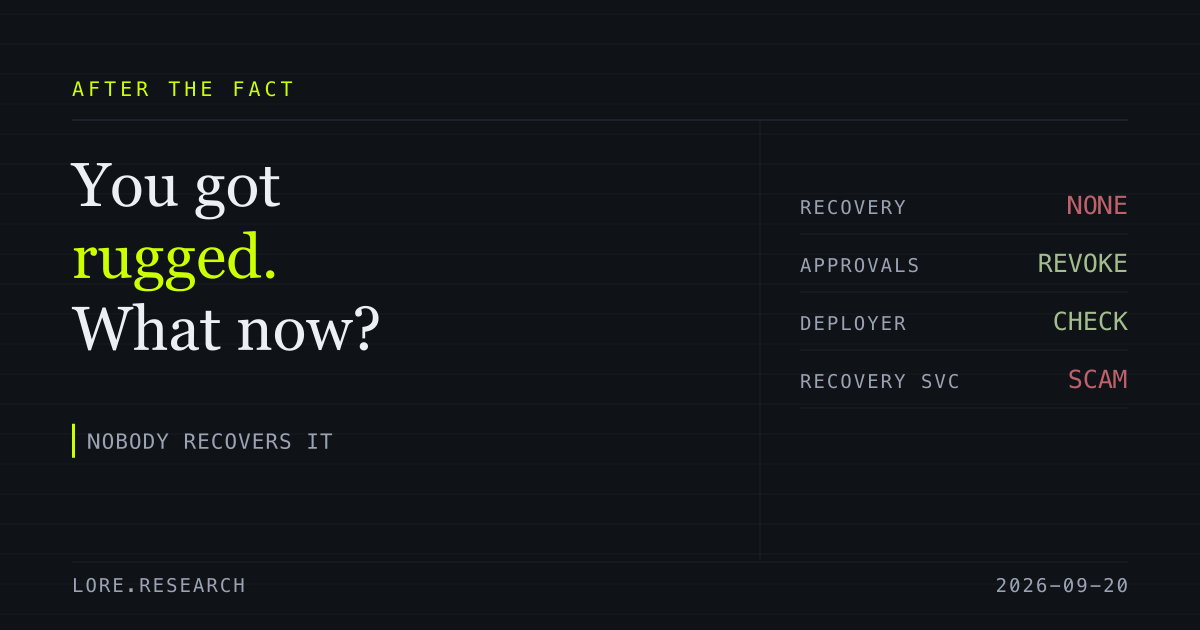
What to Do After a Rug Pull
Nothing gets the money back. Several things stop the next hour being worse than the last one.