What Liquidation Is, and the Price It Happens At
Not a penalty and not a margin call you can answer. A contract closing your position automatically, at a price you could have calculated before you opened it.
The short answer
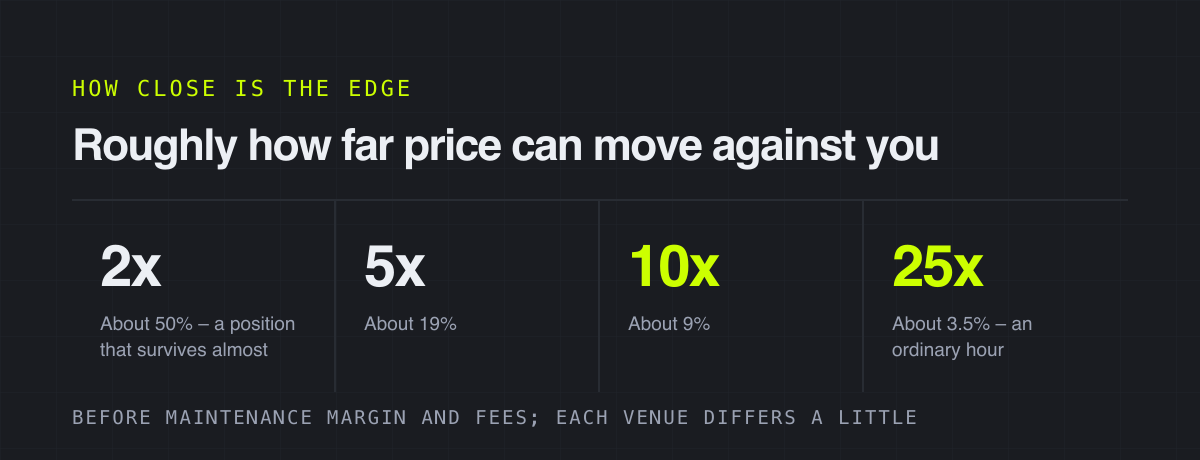
Liquidation is a leveraged position being closed by the venue because the collateral behind it has fallen below the maintenance margin. It is automatic, there is no call to answer, and the price it happens at is known in advance – it is published when you open the position. Higher leverage moves that price closer to your entry: at 10x a move of roughly 9% against you is enough, at 25x roughly 3.5%. Most liquidations are not caused by being wrong about direction but by being right too early at a size that could not survive the path.
Borrowing to trade means somebody else's money is in your position, and that somebody wants it back before it is gone. Liquidation is the mechanism that guarantees it – not a punishment, just the lender closing the trade while there is still enough left to cover the loan.
The two numbers
Your margin is what you put up. Maintenance margin is the minimum the venue requires the position to keep. When your collateral, marked at the current price, falls to the maintenance level, the position is closed. The price at which that happens is your liquidation price, and it is displayed before you confirm the order.
That is the part most worth internalising: this number is not a surprise. It is available at the moment of entry, and the decision about whether you can survive an ordinary move is a decision made then, not later.
What leverage does to the distance
Leverage does not change the odds of being right. It changes how much room the position has to be wrong on the way to being right. At 2x, price can halve before the position closes. At 25x, a three and a half percent move – something that happens on a quiet afternoon – ends it.
Why it usually happens
- Size, not direction. The view was fine; the position could not survive the path to it.
- Funding quietly eroding the collateral over days, moving the liquidation price closer without the market doing anything.
- A wick on thin liquidity, which liquidates at a price that existed for one block and never traded again.
- Adding to a losing position, which moves the liquidation price toward the current one rather than away.
- Cross margin, where one bad position reaches into the collateral of the others.
Partial and cascading
Some venues close part of a position to restore the margin rather than all of it, which buys room at the cost of realising a loss. Worth knowing which your venue does, because it changes what you are actually risking.
Cascades are the other thing to understand. Liquidations are forced market orders, and a cluster of them pushes price further in the same direction, triggering the next cluster. That is why a move can overshoot far past anything the news justified, and why liquidation prices bunched at round numbers are a hazard rather than a coincidence.
Practical, and boring
- Read the liquidation price before confirming –
 Lighter and
  Arcus both show it on the order screen. If it sits inside a normal day's range, the size is wrong.
 - Prefer isolated margin until you have a reason not to, so one position cannot take the others.
- Account for funding over the time you intend to hold – it moves the edge closer while you wait.
- Do not add to a loser to lower the average. It lowers the average and raises the liquidation price toward you.
- Use less leverage than the venue allows. The maximum is an offer, not a recommendation.
FAQ
What does liquidated mean in crypto?
Your leveraged position was closed automatically by the venue because the collateral behind it fell to the maintenance margin. It is not a penalty and there is no call to answer – the price it happens at is calculated and displayed when the position is opened.
How do you avoid liquidation?
By choosing a size whose liquidation price sits outside the range the asset moves in normally, which mostly means using far less leverage than the venue offers. Isolated margin stops one position reaching into the others, and accounting for funding matters on anything held for more than a day.
What is a liquidation cascade?
Liquidations execute as forced market orders, so a cluster of them moves price further in the same direction and triggers the next cluster. It is why moves overshoot what the news justifies, and why having your liquidation price at an obvious round number is a hazard.
More from the blog
Arbitrum Orbit: The Stack Robinhood Chain Is Built On
Not a brand on a box. A specific set of choices about who orders transactions, where the data goes, and what you are trusting when you bridge in.
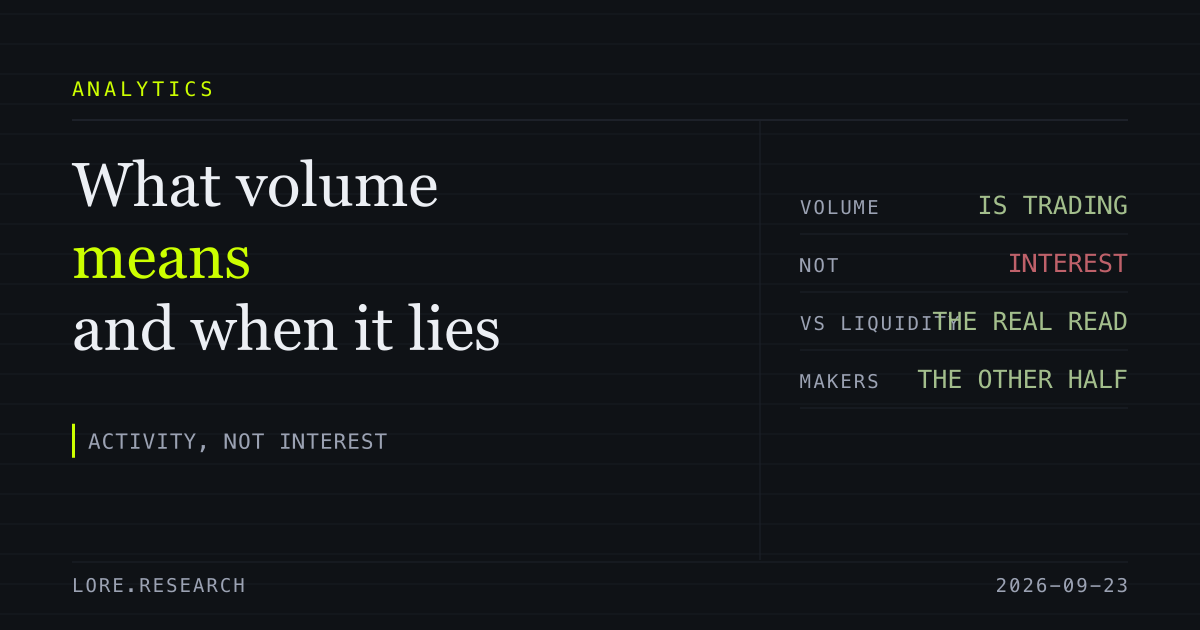
What Volume Means, and When the Number Is Manufactured
Volume is how much traded, not how many wanted to. Two wallets with a script can produce a week of it in an afternoon.
How to Swap Tokens, and the Four Screens That Matter
The swap itself is two clicks. Everything that decides whether it was a good one happens on the screens around it.