What a Depeg Is, and What to Do in the First Hour
A stablecoin below a dollar is not automatically broken, and it is not automatically a discount. Telling those apart is a small number of checks.
The short answer
A depeg is a stablecoin trading away from the value it is meant to hold. It happens for two very different reasons: the reserve behind it is genuinely impaired, or the market cannot verify the reserve fast enough and sells first. The second recovers and the first does not, and from a chart they look identical for the first few hours. The checks that separate them are the issuer's own statements, whether redemptions are still being honoured, and whether the discount exists everywhere or only on one thin venue. Acting before those three are answered is gambling on which kind it is.
The word covers a range from a rounding error to a total loss. A stablecoin at $0.998 is normal market noise. At $0.87 it is either a weekend of terror that ends fine, or the beginning of the end, and the price alone will not tell you which.
The two kinds
A verification problem
The dollars exist but nobody can confirm it right now – a bank is closed, a custodian is silent, a report is late. Holders sell because they cannot wait to find out. The price falls, the issuer eventually produces the proof, and the peg comes back. This is the most common kind and it has produced some of the largest discounts.
A reserve problem
The backing is genuinely impaired, or was never what was claimed. The price falls and keeps falling, because every hour of silence is evidence. These do not recover, and the ones that fell furthest fell from stablecoins that had looked stable for years.
The three checks, in order
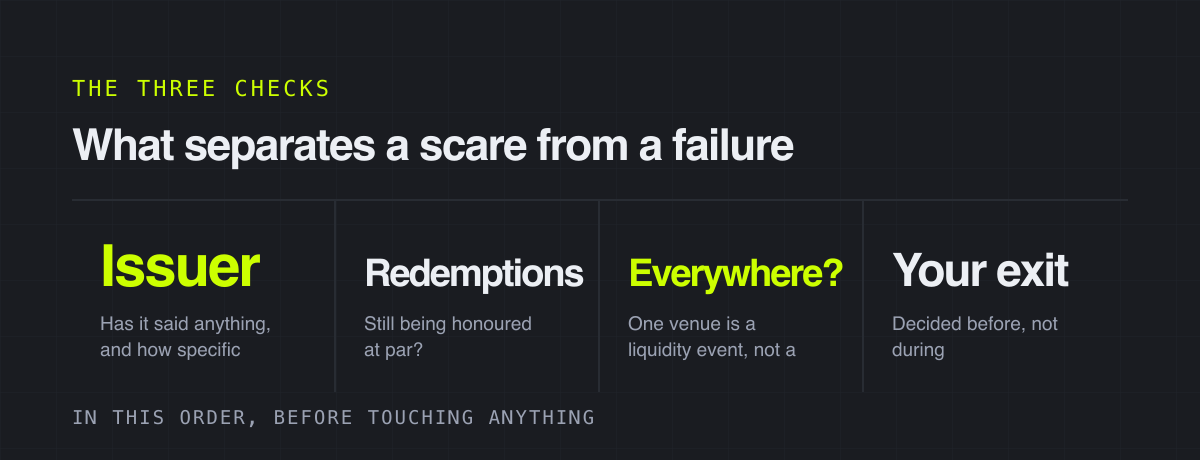
- Read the issuer directly – their own account and status page, not a summary of it. Note whether the statement names a number or only a sentiment.
- Find out whether redemptions are still being processed at par. A redemption window that is open is the strongest single signal there is; one that has been paused is the strongest signal the other way.
- Check on
 Dexscreener whether the discount exists across venues or on one. A single thin pool selling off is a liquidity event wearing a depeg's clothes.
 - Only then look at the chart, which by now you have the context to read.
The trade everyone considers
Buying the discount. It has worked spectacularly and it has gone to zero, and the distribution is exactly the two kinds above. What makes it dangerous is not the odds but the sizing: a trade that pays a few percent when right and loses everything when wrong needs a position size most people do not apply to something called a stablecoin.
If you take it, take it at a size you would use for a memecoin, because the shape of the outcome is the same.
What matters more than any of this
- Split large balances between issuers before anything happens. The cost is one swap; the benefit is not having to be right inside an hour.
- Know which pairs on your venue are deep in which stablecoin, in advance.
- Remember that a bridged or wrapped stablecoin carries the bridge's risk on top of the issuer's, and can depeg while the original does not.
- A depeg on a thin chain can be pure liquidity – the same token is fine elsewhere, and the local price is just a small pool being sold into.
- Panicking into the other stablecoin at a bad price is the most common way people lose money in a depeg that later recovered.
The honest summary
Most depegs recover, which is exactly why the ones that do not are so expensive: the habit of waiting is rewarded repeatedly and then punished once. The defence is structural rather than tactical – not being concentrated in one issuer means never having to solve this puzzle under time pressure.
Tools mentioned
FAQ
What does depeg mean?
A stablecoin trading away from the value it is designed to hold – usually a dollar. It ranges from meaningless noise a fraction of a cent wide to a total failure, and the price on its own does not say which is happening.
Do stablecoins recover from a depeg?
Most do, because most depegs are a verification problem rather than a reserve problem – the backing exists and the market cannot confirm it fast enough. The ones that do not recover are the ones where the backing was genuinely impaired, and the two look the same for the first few hours.
Should you buy a depegged stablecoin?
Only at a size you would use for a speculative position, because the outcome has that shape: a few percent when right, close to everything when wrong. The checks that improve the odds are whether redemptions are still open at par and whether the discount exists on more than one venue.
More from the blog
Arbitrum Orbit: The Stack Robinhood Chain Is Built On
Not a brand on a box. A specific set of choices about who orders transactions, where the data goes, and what you are trusting when you bridge in.
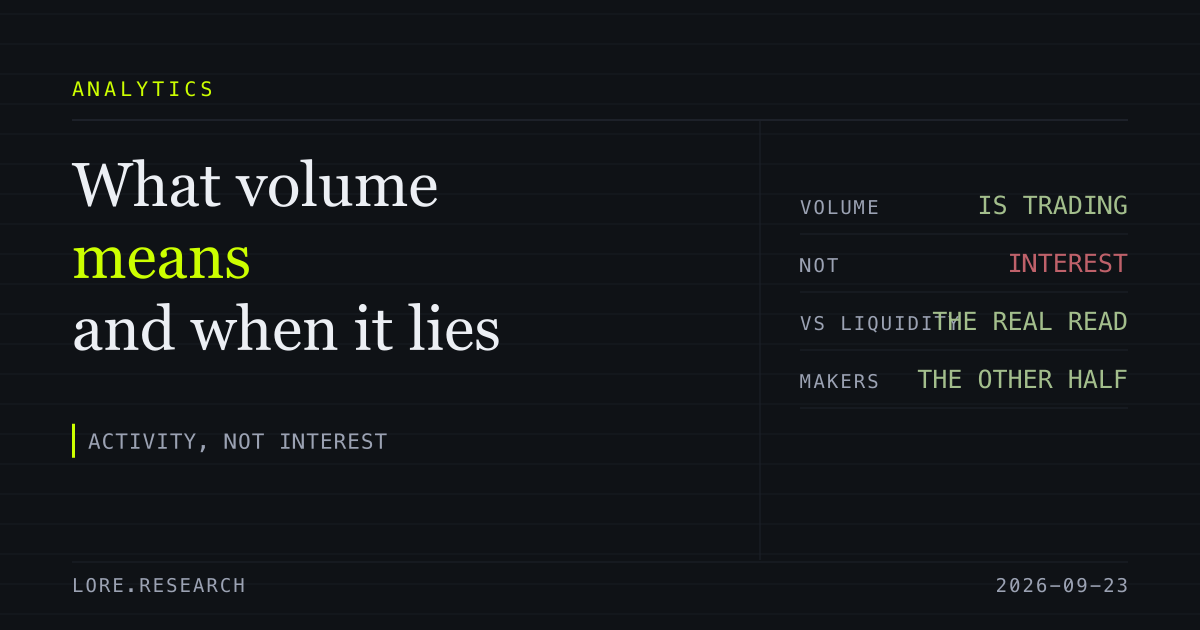
What Volume Means, and When the Number Is Manufactured
Volume is how much traded, not how many wanted to. Two wallets with a script can produce a week of it in an afternoon.
How to Swap Tokens, and the Four Screens That Matter
The swap itself is two clicks. Everything that decides whether it was a good one happens on the screens around it.